Efforts to combat Ebola as the deadly disease has expanded across borders - UN said on Friday.


Efforts to combat Ebola as the deadly disease has expanded across borders - UN said on Friday.
Eating late at night may face higher risk of liver disease, including fatty liver disease and cirrhosis, a large study led by researchers at Oregon Health and Science University (OHSU), United States, has found.

The first Nigerian confirmed Ebola case is the wife of a diplomat who had travel to Uganda's capital for a holiday, the head of Africa's health agency has told the BBC.

Yellow fever is spread by a species of mosquito common to areas of Africa and South America. Vaccination is recommended before travelling to certain areas.

It is prone to epidemics and is preventable with a vaccine. These day-biting mosquitoes breed around houses (domestic), in forests or jungles (wild), or in both habitats (semi-domestic).
Seeing blood in your urine can be alarming. While in many instances the cause of this is harmless, blood in urine (hematuria) can indicate a serious disorder.


Mpox (formerly known as monkeypox) is a disease caused by infection with a virus, known as Monkeypox virus.

The first doses of potentially the first new tuberculosis (TB) vaccine in a century were administered at a clinical trial site in Johannesburg, South Africa, marking a crucial step in the fight against this deadly disease.

Lassa fever is an acute


Cardiovascular diseases (CVDs) is one of the leading cause of death globally, taking lives of estimated 17.9 million yearly.

These diseases are group of disorders of the heart and blood vessels which also include coronary heart disease, cerebrovascular disease, rheumatic heart disease and other conditions.
Over four out of five CVD deaths are due to heart attacks and strokes, and one third of these deaths occur prematurely in people under 70 years of age.
The most important behavioural risk factors of heart disease and stroke are unhealthy diet, physical inactivity, tobacco use and harmful use of alcohol.
The effects of behavioural risk factors may show up in individuals as raised blood pressure, raised blood glucose, raised blood lipids, and overweight and obesity.
These “intermediate risks factors” can be measured in primary care facilities and indicate an increased risk of heart attack, stroke, heart failure and other complications.
Cessation of tobacco use, reduction of salt in the diet, eating more fruit and vegetables, regular physical activity and avoiding harmful use of alcohol have been shown to reduce the risk of cardiovascular disease.
Health policies that create conducive environment for making healthy choices affordable and available are essential for motivating people to adopt and sustain healthy behaviours.
Identifying those at highest risk of CVDs and ensuring they receive appropriate treatment can prevent premature deaths.
Access to non-communicable disease medicines and basic health technologies in all primary health care facilities is essential to ensure that those in need receive treatment and counselling.

Hypertrophic CardioMyopathy (HCM) is a condition that affects around 1 in 500 people.
It causes the muscular walls of the heart to become thicker than normal, affecting how well the heart can pump blood around the body.
It is a leading cause of heart failure and sudden cardiac death.
Two cutting-edge heart scanning techniques: cardiac diffusion tensor imaging (cDTI), a type of MRI scan that shows how individual heart muscle cells are organised and packed together (the heart's microstructure), and cardiac MRI perfusion (perfusion CMR), which detects problems with the small blood vessels supplying the heart muscle (microvascular disease).
The scans showed that people with overt signs of HCM have very abnormal organisation of their heart muscle cells, and a high rate and severity of microvascular disease compared to healthy volunteers.
The first drug to slow HCM progression -- mavacamten -- has recently been approved for use in Europe and will allow doctors to reduce the severity of the disease once symptoms and muscle thickening have appeared. Genetic therapies are also in development which could prevent symptoms entirely by intercepting HCM development at an early stage.
Perfusion CMR is already being used in some clinics to help differentiate people with HCM from other causes of muscle thickening.
The researchers think that these revolutionary new therapies, combined with cDTI and perfusion CMR scans, give doctors the best ever chance of treating people at risk of HCM early enough that the condition never develops.
Dr George Joy, who led the research with Professor James Moon and Dr Luis Lopes (all UCL Institute of Cardiovascular Science), said:
"The ability to detect early signs of HCM could be crucial in trials testing treatments aimed at preventing early disease from progressing or correcting genetic mutations.
The scans could also enable treatment to start earlier than we previously thought possible.
"We now want to see if we can use the scans to identify which patients without symptoms or heart muscle thickening are most at risk of developing severe HCM and its life-changing complications.
The information provided from scans could therefore help doctors make better decisions on how best to care for each patient."
Dr Luis Lopes (UCL Institute of Cardiovascular Science), senior author of the study, said: "By linking advanced imaging to our cohort of HCM patients (and relatives) with extensive genetic testing, this study detected microstructural abnormalities in vivo in mutation carriers for the first time and was the first to compare these parameters in HCM patients with and without a causal mutation.
"The findings allow us to understand more about the early subclinical manifestations of this serious condition but also provide additional clinical tools for screening, monitoring and hopefully in the near future for therapeutic decision-making."
Source: University College London.
Coronavirus case increament hindering economic recoveries, The swift, record-shattering spike in coronavirus cases has dampened consumer activity, spurred layoffs and forced millions of people to take care of themselves or a sick family member.


Over one million
sexually transmitted infections (STIs) are acquired daily globally. The majority are asymptomatic, meaning that individuals are
unlikely to know they have one.
Stomach cancer is a form of cancer found anywhere in the stomach. It's not as common as other forms of cancer.


Dr Jay Chatterjee warned that a virus can lead to cancerous cells in the cervix, which is the opening between the vagina and the womb and part of the reproductive system.
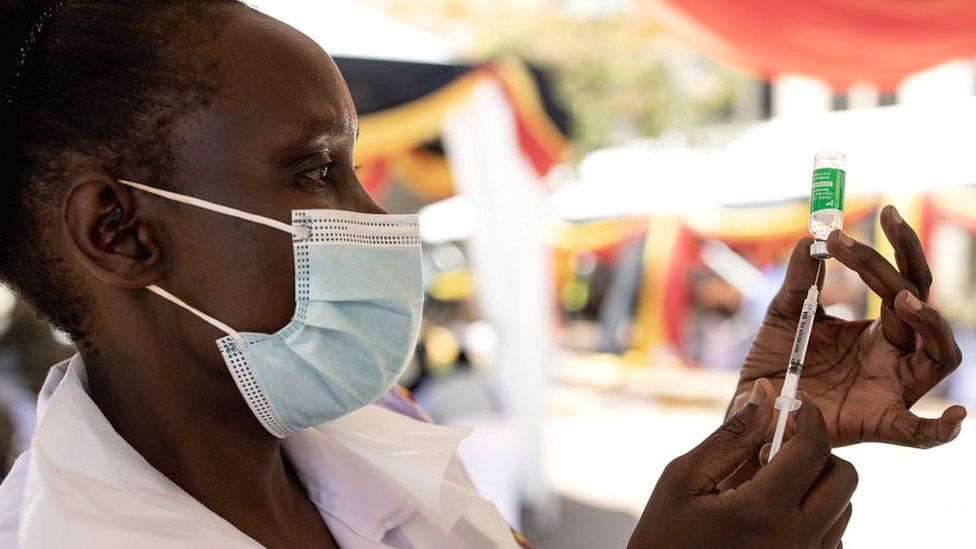
Scientists have advised the government that approving larger numbers of human in under-developed countries to go un-vaccinated is "careless" and could lead to spread of new variants.


