Mpox (formerly known as monkeypox) is a disease caused by infection with a virus, known as Monkeypox virus.


Mpox (formerly known as monkeypox) is a disease caused by infection with a virus, known as Monkeypox virus.
Medical Researvhers has detected a new variants, nicknamed FLiRT, which was detected in wastewater surveillance data, the CDC said.

Total number of adults aged 30–79 years with hypertension has increased from 650 million to 1.28 billion in the last thirty years, according to the first comprehensive global analysis of trends in hypertension prevalence, detection, treatment and control.

Almost half of these people are not aware hypertension is living in them.
Hypertension significantly increases the risk of heart, brain and kidney diseases, and is one of the top causes of death and disease throughout the world.
It can be easily detected through measuring your blood pressure, at home, office, health centre or anywhere by carrying a personal portable machine for measuring your Blood Pressure, and can often be treated effectively with medications that are low cost.
The study, conducted by a global network of physicians and researchers, covered the period 1990–2019.
It used blood pressure measurement and treatment data from over 100 million people aged 30–79 years in 184 countries, together covering 99% of the global population, which makes it the most comprehensive review of global trends in hypertension to date.
By analysing this massive amount of data, the researchers found that there was little change in the overall rate of hypertension in the world from 1990 to 2019, but the burden has shifted from wealthy nations to low- and middle-income countries.
The rate of hypertension has decreased in wealthy countries which now typically have some of the lowest rates but has increased in middle income countries.
As a result, Canada, Peru and Switzerland had among the lowest prevalence of hypertension in the world in 2019, while some of the highest rates were seen in the Dominican Republic, Jamaica and Paraguay for women and Hungary, Paraguay and Poland for men.
Although the percent of people who have hypertension has changed little since 1990, the number of people with hypertension doubled to 1.28 billion.
This was primarily due to population growth and ageing. In 2019, over one billion people with hypertension (82% of all people with hypertension in the world) lived in low- and middle-income countries.
Study revealed significant gaps in diagnosis and treatment.
About 580 million people with hypertension (41% of women and 51% of men) were unaware of their condition because they were never diagnosed.
The study also indicated that more than half of people (53% of women and 62% of men) with hypertension, or a total 720 million people, were not receiving the treatment that they need.
Blood pressure was controlled, which means medicines were effective in bringing blood pressure to normal ranges, in fewer than 1 in 4 women and 1 in 5 men with hypertension.
Professor Majid Ezzati, senior author of the study and Professor of Global Environmental Health at the School of Public Health at Imperial College London, said:
“Nearly half a century after we started treating hypertension, which is easy to diagnose and treat with low-cost medicines, it is a public health failure that so many of the people with high blood pressure in the world are still not getting the treatment they need.”
Men and women in Canada, Iceland and the Republic of Korea were most likely to receive medication to effectively treat and control their hypertension, with more than 70% of those with hypertension receiving treatment in 2019.
Comparatively, men and women in sub-Saharan Africa, central, south and south-east Asia, and Pacific Island nations are the least likely to be receiving medication.
Treatment rates were below 25% for women, and 20% for men, in a number of countries in these regions, creating a massive global inequity in treatment.
Encouragingly, some middle-income countries have successfully scaled up treatment, and are now achieving better treatment and control rates than most high-income nations.
The ‘WHO Guideline for the pharmacological treatment of hypertension in adults’, also released today, provides new recommendations to help countries improve the management of hypertension.
Dr Taskeen Khan, of WHO’s Department of Noncommunicable Diseases, who led the guideline development, said:
“The new global guideline on the treatment of hypertension, the first in 20 years, provides the most current and relevant evidence-based guidance on the initiation of medicines for hypertension in adults.”
The recommendations cover the level of blood pressure to start medication, what type of medicine or combination of medicines to use, the target blood pressure level, and how often to have follow-up checks on blood pressure.
In addition, the guideline provides the basis for how physicians and other health workers can contribute to improving hypertension detection and management.
Dr Bente Mikkelsen, Director of WHO’s Department of Noncommunicable Diseases added:
“The need to better manage hypertension cannot be exaggerated.
By following the recommendations in this new guideline, increasing and improving access to blood pressure medication, identifying and treating comorbidities such as diabetes and pre-existing heart disease, promoting healthier diets and regular physical activity, and more strictly controlling tobacco products, countries will be able to save lives and reduce public health expenditures.”
The World Health Organization (WHO) had released its first-ever report on the

The report shows 4 out of every 5 people with hypertension are not adequately treated, but if countries can scale up coverage, 76 million deaths could be averted between 2023 and 2050.
Hypertension affects 1 in 3 adults globally.
This common, deadly condition leads to stroke, heart attack, heart failure, kidney damage and many other related health problems.
The number of people living with hypertension (blood pressure of 140/90 mmHg or higher or taking medication for hypertension) doubled between 1990 and 2019, from 650 million to 1.3 billion.
Nearly half of people with hypertension globally are currently unaware of their conditions.
More than three-quarters of adults with hypertension live in low- and middle-income countries.
Older age and genetics can increase the risk of having high blood pressure, but modifiable risk factors such as eating high-salt diet, not being physically active and drinking too much alcohol can also increase the risk of hypertension.
Lifestyle changes such as taking a healthier diet, quitting, being exercising and activeetc all these can help lower blood pressure.
Some people may need medicines that can control hypertension effectively and prevent related complications.
Early detection and effective management of hypertension are cost-effective in health care and should be prioritized by countries as part of their national health benefit package offered at a primary care level.
“Hypertension can be controlled effectively with simple, low-cost medication regimens, and yet only about one in five people with hypertension have controlled it.” Said Dr. Tedros Adhanom Ghebreyesus, WHO Director-General.
“Hypertension control programmes remain neglected, under-prioritized and vastly underfunded.
Strengthening hypertension control must be part of every country’s rudiments towards universal health coverage, based on well-functioning, equitable and resilient health systems, built on a foundation of primary health care.”
The report is being launched during the 78th Session of the United Nations General Assembly which addresses progress for the Sustainable Development Goals including health goals on pandemic preparedness and response, ending tuberculosis and attaining Universal Health Coverage.
Better prevention and control of hypertension will be essential to progress in all of these.
An increase in the number of patients effectively treated for hypertension to levels observed in high-performing countries could prevent 76 million deaths, 120 million strokes, 79 million heart attacks, and 17 million cases of heart failure between now and 2050.
“Most heart attacks and strokes in the world today can be prevented with affordable, safe, accessible medicines and other interventions, such as sodium reduction,” said Michael R. Bloomberg, WHO Global Ambassador for Noncommunicable Diseases and Injuries.
“Treating hypertension through primary health care will save lives, while also saving billions of dollars a year.”
Over 40 low- and middle-income countries, including Bangladesh, Cuba, India and Sri Lanka, have strengthened their hypertension care with the HEARTS package, enrolling more than 17 million people into treatment programmes.
Countries such as Canada and South Korea delivered comprehensive national hypertension treatment programmes, and both countries surpassed the 50% mark for blood pressure control in adults living with hypertension.
Sustained, systematic national hypertension control programmes can succeed—and a high level of blood pressure control translates into fewer strokes and heart attacks, and longer, healthier lives.
The report underscores the importance of implementing WHO-recommended effective hypertension care to save lives, which include the following five components:
“Every hour, more than 1 000 people die from strokes and heart attacks. Most of these deaths are caused by high blood pressure, and most could have been prevented,” said Dr Tom Frieden, President & CEO, Resolve to Save Lives.
“Good hypertension care is affordable, within reach, and strengthens primary health care.
The challenge now is to go from “within reach” to “reached.” This will require commitment of governments around the world.”

Dr Jay Chatterjee warned that a virus can lead to cancerous cells in the cervix, which is the opening between the vagina and the womb and part of the reproductive system.
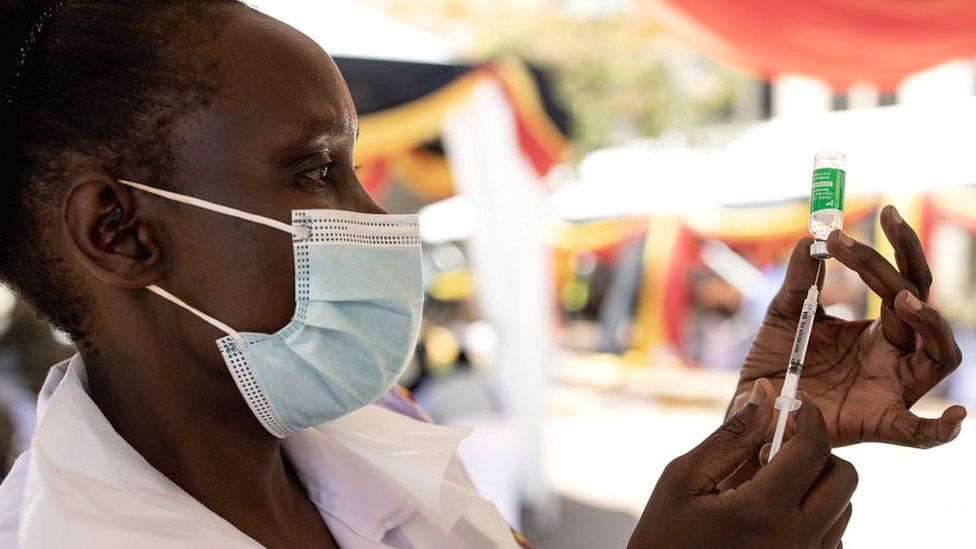
Scientists have advised the government that approving larger numbers of human in under-developed countries to go un-vaccinated is "careless" and could lead to spread of new variants.
The AFCON newcomer are in position to input an outfield player in goal as all the three recognized shot-stoppers are unavailable.

The Eagles of Tunisia will likely be forced to play team B against the Super Eagles of Nigeria when both country face each other on Sunday’s round of 16 match at the ongoing African Cup of Nations.


There are different myths that exist on the deadly coronavirus (COVID-19) causing serious havoc globally.
The World Health Organisation (WHO) on its website and Twitter shatters 15 of such myths.
Here are the top myth stated by WHO
Myth 1:
COVID-19 virus can be transmitted in areas with hot and humid climates.
From the evidence so far, the COVID-19 virus can be transmitted in ALL AREAS, including areas with hot and humid weather. Regardless of climate, adopt protective measures if you live in, or travel to an area reporting COVID-19. The best way to protect yourself against COVID-19 is by frequently cleaning your hands. By doing this you eliminate viruses that may be on your hands and avoid infection that could occur by then touching your eyes, mouth, and nose.

Myth 2
Cold weather and snow CANNOT kill the new coronavirus.
There is no reason to believe that cold weather can kill the new coronavirus or other diseases. The normal human body temperature remains around 36.5°C to 37°C, regardless of the external temperature or weather. The most effective way to protect yourself against the new coronavirus is by frequently cleaning your hands with alcohol-based hand rub or washing them with soap and water.
Myth 3
Taking a hot bath does not prevent the new coronavirus disease.
Taking a hot bath will not prevent you from catching COVID-19. Your normal body temperature remains around 36.5°C to 37°C, regardless of the temperature of your bath or shower. Actually, taking a hot bath with extremely hot water can be harmful, as it can burn you. The best way to protect yourself against COVID-19 is by frequently cleaning your hands. By doing this you eliminate viruses that may be on your hands and avoid infection that could occur by then touching your eyes, mouth, and nose.
Myth 4
The new coronavirus CANNOT be transmitted through mosquito bites.
To date there has been no information nor evidence to suggest that the new coronavirus could be transmitted by mosquitoes. The new coronavirus is a respiratory virus which spreads primarily through droplets generated when an infected person coughs or sneezes, or through droplets of saliva or discharge from the nose. To protect yourself, clean your hands frequently with an alcohol-based hand rub or wash them with soap and water. Also, avoid close contact with anyone who is coughing and sneezing.

Myth 5
Are hand dryers effective in killing the new coronavirus?
No. Hand dryers are not effective in killing the 2019-nCoV. To protect yourself against the new coronavirus, you should frequently clean your hands with an alcohol-based hand rub or wash them with soap and water. Once your hands are cleaned, you should dry them thoroughly by using paper towels or a warm air dryer.

Myth 6
Can an ultraviolet disinfection lamp kill the new coronavirus?
UV lamps should not be used to sterilize hands or other areas of skin as UV radiation can cause skin irritation.
Myth 7
How effective are thermal scanners in detecting people infected with the new coronavirus?
Thermal scanners are effective in detecting people who have developed a fever (i.e. have a higher than normal body temperature) because of infection with the new coronavirus.
However, they cannot detect people who are infected but are not yet sick with fever. This is because it takes between 2 and 10 days before people who are infected become sick and develop a fever.

Myth 8
Can spraying alcohol or chlorine all over your body kill the new coronavirus?
No. Spraying alcohol or chlorine all over your body will not kill viruses that have already entered your body. Spraying such substances can be harmful to clothes or mucous membranes (i.e. eyes, mouth). Be aware that both alcohol and chlorine can be useful to disinfect surfaces, but they need to be used under appropriate recommendations.

Myth 9
Do vaccines against pneumonia protect you against the new coronavirus?
No. Vaccines against pneumonia, such as pneumococcal vaccine and Haemophilus influenza type B (Hib) vaccine, do not provide protection against the new coronavirus.
The virus is so new and different that it needs its own vaccine. Researchers are trying to develop a vaccine against 2019-nCoV, and WHO is supporting their efforts.
Although these vaccines are not effective against 2019-nCoV, vaccination against respiratory illnesses is highly recommended to protect your health.
Myth 10
Can regularly rinsing your nose with saline help prevent infection with the new coronavirus?
No. There is no evidence that regularly rinsing the nose with saline has protected people from infection with the new coronavirus.
There is some limited evidence that regularly rinsing nose with saline can help people recover more quickly from the common cold. However, regularly rinsing the nose has not been shown to prevent respiratory infections.
Myth 11
Can eating garlic help prevent infection with the new coronavirus?
Garlic is a healthy food that may have some antimicrobial properties. However, there is no evidence from the current outbreak that eating garlic has protected people from the new coronavirus.
Myth 12
Does the new coronavirus affect older people, or are younger people also susceptible?
People of all ages can be infected by the new coronavirus (2019-nCoV). Older people, and people with pre-existing medical conditions (such as asthma, diabetes, heart disease) appear to be more vulnerable to becoming severely ill with the virus.
WHO advises people of all ages to take steps to protect themselves from the virus, for example by following good hand hygiene and good respiratory hygiene.
Myth 13
Are antibiotics effective in preventing and treating the new coronavirus?
No, antibiotics do not work against viruses, only bacteria.
The new coronavirus (2019-nCoV) is a virus and, therefore, antibiotics should not be used as a means of prevention or treatment.
However, if you are hospitalized for the 2019-nCoV, you may receive antibiotics because bacterial co-infection is possible.
Myth 14
Are there any specific medicines to prevent or treat the new coronavirus?
To date, there is no specific medicine recommended to prevent or treat the new coronavirus (2019-nCoV).
However, those infected with the virus should receive appropriate care to relieve and treat symptoms, and those with severe illness should receive optimized supportive care. Some specific treatments are under investigation, and will be tested through clinical trials. WHO is helping to accelerate research and development efforts with a range or partners.
Myth 15
COVID-19 is airborne
No. The coronavirus is mainly transmitted through droplets generated when an infected person coughs, sneezes or speaks.
To protect yourself: keep one metre distance from others, disinfect surfaces frequently, wash/rub your Open hands and avoid touching your Eyes


Emeka Oguanuo, an official of the Nigeria Centre for Disease Control (NCDC), disclosed this in the early hours of Saturday.
Chikwe Ihekweazu, NCDC director-general, had earlier said the centre was conducting tests on travellers from China.
“Last night, we had two cases and tests are going on at the moment. As soon as they are completed, it will be announced. If a person returns to the country, say within 20 or 30 days, there is no point wasting reagents to test such a person,” Ihekweazu had said in a statement.
“For other diseases, we usually advise people to go to the hospitals to get tested, but for suspected cases of coronavirus, patients are advised to simply put a call through to us, we will come to the patient because going to the hospital can amplify the disease if it is found to be positive.”


An American woman, Iesha Thomas, reportedly cured of sickle cell.
If you or somebody you know suffers from sickle cell disease, there is green light at the end of the tunnel.
Iesha Thomas, who suffered from the disease is the first to be cured.
Sickle cell affects 1 in every 1000 African Americans in the U.S. But, the good news is that disease might finally be into extinction.
Iesha Thomas, 33, was living with the disease that progressively got worse. It seriously wreaked havoc on her life after she gave birth to her daughter which resulted in repeated blood transfusions and 2 hip replacements due to bone damage.
The disease can be extremely painful. What happens is a defect that causes the oxygen-carrying red blood cells to take on a sickle-like appearance.
The blood cells deliver less oxygen to the body’s tissues, causing severe pain, stroke, and even organ damage.
But a great breakthrough has occurred! Thomas is the first patient in the midwest to be cured of the Sickle Cell Disease.
“I just want to be at home with my daughter every day and every night,” said Thomas.
Physicians at the University of Illinois Hospital & Health Science System performed a procedure using medication to suppress her immune system and a small dose of total body radiation before doing the stem cell transplant. The procedure allows for the patient’s own bone marrow to coexist with that of the donor. The goal of the transplant is for the stem cells to gradually take over the bone marrow’s role in producing normal, and healthy red blood cells.
Congrats Iesha. How amazing! We’re rooting for you and all people suffering from sickle cell for complete health and healing. This procedure could really turn things around.
SOURCE: NIGERIA NEWS WORLD

Photo Credit: Huffington Post
Obesity and diabetes causes around 800,000 cancers yearly, with women being nearly twice as likely to suffer as men, new research reveals.
Carrying too much weight resulted in 544,300 cancer cases worldwide in 2012, while diabetes caused 280,100 incidences; together making up nearly six per cent of global cases, according to the first study of its kind.
If obesity and type 2 diabetes rates continue to rise, the two conditions could be responsible for up to 30 per cent of cancers around the world in 2035, researchers predict.
The study’s findings were published in the journal The Lancet Diabetes & Endocrinology.
Being overweight is linked to cancer as excess fat causes the release of hormones that affect how cells work, however, diabetes’ association to the disease is less well understood.
It is thought diabetes’ inflammatory-effects, as well as its impact on insulin and blood sugar levels, may play a role.
Researchers from Imperial College London analysed the data of 12 different types of cancer along with Body Mass Index (BMI) and diabetes information from 175 countries in 2012.
Results reveal excess weight and diabetes together account for a quarter of all liver cancers and a third of endometrial cancers, which affects the lining of the womb.
Nearly 30 per cent of breast cancers affecting women are thought to be caused by diabetes and carrying too much weight, with the two conditions also often leading to endometrial cancer, the study found.
In men, obesity and diabetes most commonly cause liver cancer, followed by bowel cancer.
Lead researcher Dr. Jonathan Pearson-Stuttard said: “While obesity has been associated with cancer for some time, the link between diabetes and cancer has only been established quite recently.
“Our study shows that diabetes, either on its own or combined with being overweight, is responsible for hundreds of thousands of cancer cases each year across the world.”
SOURCE: GUARDIAN
Nigerian Catfish Pepper Soup (popularly known as Point & Kill) can be a source of cancerous disease due to its abundance in omega 6 fatty acids.
A cardiologist, Dr. Jane Anisulowo, says that farm or home-grown catfish is the worst example in this regard, as it contains more fatty hormones than the ones harvested from natural water.
Anisulowo says, “Fish is better than meat, no doubt. It digests easily and it contains proteins.
However, catfish is not really a good option, especially the ones they sell these days, which are cultivated with hormonal feeds that are filled with steroids and other fattening chemicals just to make them profitable.
These chemicals are cancerous in nature.“Also, they contain so much oil that you can almost taste it. Fish, generally, contains oil, but catfish has oil in its skin. That is what makes it so oily and unhealthy.
“It also contains a lot of poly unsaturated fat that does not only make you fat but also settles in the blood stream.
That is very dangerous because when blood fails to get to an organ, it fails and suffers paralysis.”
“If you can get the one from the river, which is rare in most cities, then you may eat it twice a month.
But if the only one you can get is the one that is being reared by farmers, you don’t have to eat at all, or just eat it when it is partially smoked.
In that way, some of the fats would have been lost in the process. Better still, there are some other species of fish that are oily but they contain good fats and are more nutritious.”


