A new research has found that using an aspirin daily could lower women’s risk of getting infected with HIV by 35 per cent.


Green light in the tunnel for the production and acceptance of the Nigerian anti-retroviral drug for the cure of HIV/ AIDS which is developed by Prof. Maduike Ezeibe, a renowned researcher at the Michael Okpara University of Agriculture, Umudike in Abia State, has received a boost with the granting of application for patent right to produce the drug for consumption by President Muhammadu Buhari.
This is in addition to financial assistance given to the researcher by Abia State government and the management of Michael Okpara University of Agriculture Umudike to carry out more trials on the efficacy of the drug both within and outside the country.
Professor Ezeibe’s claims recently to have found a cure for the dreaded scourge, using Aluminium Magnasium Silicate (AMS) and simple sugar to attack the virus in any part of the body, including the “sanctuary cells” had raised some criticisms and skepticisms from many circles despite his claims of cure for over 10 patients and research findings published in international journals.
Speaking on AMS at a lecture, organised by the Students’ Union Government (SUG) of the MOUA to mark the World AIDS Day Celebration on Friday, he advised persons living with the scourge not to despair.
He said that a permanent cure was imminent, pointing out that researchers all over the world were making concerted efforts to develop a cure for one of the greatest threats to human existence globally.
He said all over the world, researchers are making efforts to invent a drug that will permanently cure HIV/AIDS and expressed optimism that a global success was imminent as according to him, “ with the Nigerian anti-retroviral drug from my research finding, the world now know that to permanently cure the scourge, you need nanotechnology.”
“You cannot cure the disease with ordinary anti-retroviral drugs because their molecules are big and cannot reach the sanctuary cells,” he said.
The Prof of Veterinary Medicine said that the only medicine that could cure the virus should have small molecules, which could penetrate every part of the body, where ordinary drugs cannot reach.
According to Ezeibe, “Silicates have molecules that are 0.96 nanometer in size, while HIV has molecules as big as 110 nanometer, hence silicates can reach even the sanctuary cells.”
He further said that “the particles of AMS are positively and negatively charged, while HIV-infested cells are positively charged.”
He said that “one can use simple sugar (glucose) to transport charged molecules across the mucus membrane to the blood, up to the sanctuary cells.”
Ezeibe who said he had carried out a successful animal trial with the AMS and was currently doing clinical trial added that the drug did not have adverse side effects because “it works by physical effects on the virus.”
He said that with the financial assistance from the Abia State government and the university authorities, he had handled several cases, from within and outside Nigeria, free of charge.
He said that President Muhammadu Buhari recently approved his application for the patency to produce the drug for consumption.
He said that he was looking for funds for the mass production and commercialization of the drug.
Ezeibe said that the drug had successfully passed through peer review by 21 researchers and laboratory tests but because he lacked the legal backing to directly administer the drugs, he was working in collaboration with the University’s Medical Centre.
He said, “It is within the domain of a veterinarian to develop drugs which would be tried on animals before they are used on human beings by physicians.”
In his opening remarks, the President of the SUG, Mr Precious Ononiwu, said that the lecture was organised to “educate and enlighten the students on the new drug.”
Ononiwu commended Ezeibe for the invention, saying that it had further boosted the image of the university above other universities in Nigeria and beyond.
“Any time I attend meetings of SUG presidents in the South East, I now brag that the professor that invented the cure for HIV/AIDS comes from my university,” he said.
SOURCE: LEADERSHIP
Anti Retroviral (ARV) drugs have been scientifically validated to be effective in treatment of HIV and preventing new infections. But the benefit comes at a great cost: liver and kidney damage, cancer among others.
However, several studies have identified and validated local plants/herbs that could be used to boost immunity, prevent and treat opportunistic infections in people living with HIV without unpleasant side effects.
Earlier studies had shown that a combination of local herbs including bitter leaf, bitter kola, lemon, lemon grass, Moringa, Gardonema mushroom and Neem tree could provide the elusive cure for HIV that causes AIDS.
Neem and citrus fruits
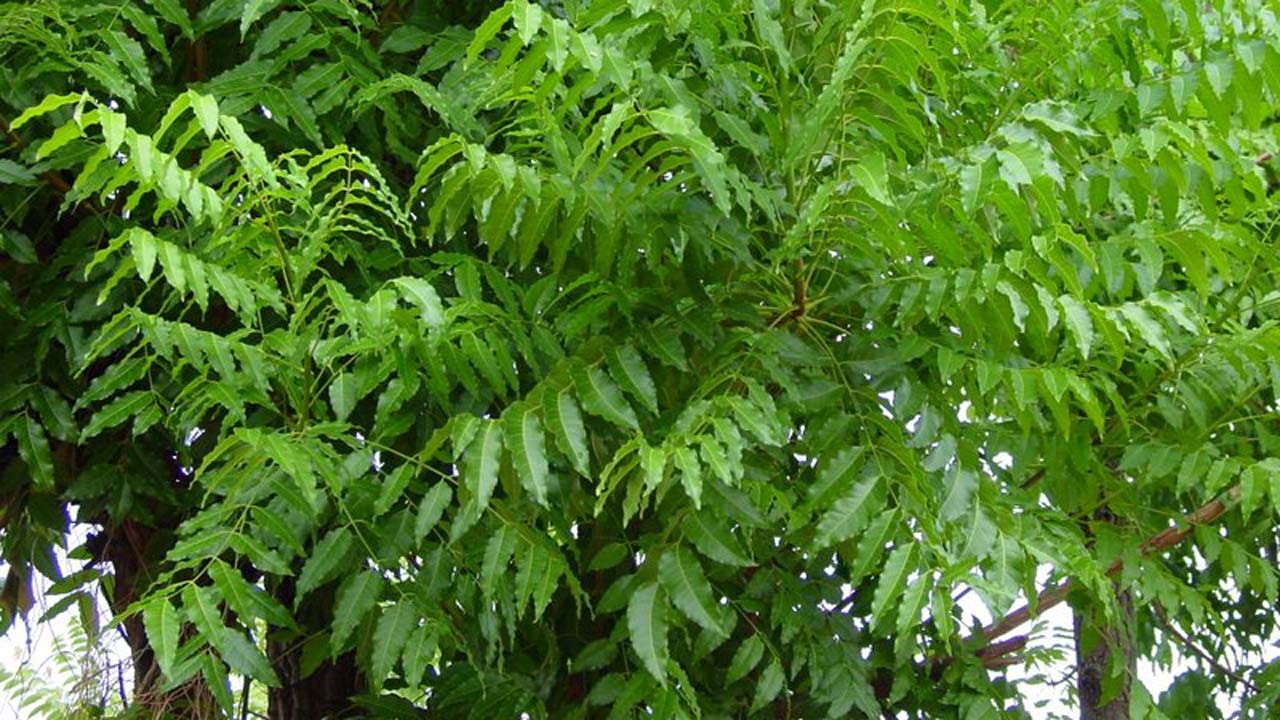
But a recent study published in Indian Journal of Traditional Knowledge showed how leaf extracts from neem tree (Azadirachta indica/Dogonyaro) stopped HIV infection.
The study is titled “HIV-1 infection inhibition by neem (Azadirachta indica A. Juss.) leaf extracts and Azadirachtin.”
The researchers wrote: “… the objective of this study was to evaluate HIV-1 infection inhibition by neem leaf extracts and neem compounds. Cytotoxicity of aqueous and ethanolic neem leaf extracts and Azadirachtin and Limonene compounds was evaluated in CEM T-cells at concentrations of 1 ppm, 10 ppm (extracts); 1 μM, 10 μM (compounds). Only the aqueous extract concentration of 1 ppm and Azadirachtin at 1 μM and 10 μM concentrations allowed a cell viability of 100 per cent compared with controls. Based on the results of cytotoxicity we proceeded to evaluate the HIV infection inhibition with the aqueous extract at concentration of 1 ppm and Azadirachtin at both concentrations. Inhibition percentages greater than 50 per cent were obtained and showed to be significant compared to controls.

Fresh lemons
“This work evidenced the HIV infection inhibition by aqueous neem leaf extracts and Azadirachtin; even though, the antiretroviral mechanism is not completely understood. Furthermore, more studies need to be conducted in order to identify the active compound responsible for the anti HIV activity described in the aqueous extract.”
D-limonene is one of the most common terpenes in nature. It is a major constituent in several citrus oils (orange, lemon, mandarin, lime, and grapefruit).
Stonebreaker
A study published in Indian Journal of Medical Sciences has demonstrated the effects of alkaloidal extract of Phyllanthus niruri on HIV replication.
Commonly called stonebreaker, Phyllanthus niruri also known as ‘Chanca piedra’ belongs to the family Euphorbiaceae. Phyllanthus niruri is similar to Phyllanthus amarus, which also belongs to the same family. It is a widespread tropical plant commonly found in coastal areas that grows 40 to 70cm tall.
In Nigeria, it is called enyikwonwa and ngwu in the Ibo, oyomokeso amanke edem in Efik, geeron-tsuntsaayee (bird’s millet) in Hausa, ehin olobe and yin-olobe in Yoruba.
The researchers from the Pharmaceutical Division, Institute of Chemical Technology, University of Mumbai, Matunga, Mumbai, India, noted: “Phyllanthus niruri has been found to exhibit marked inhibitory effect on hepatitis B virus evident by its exhaustive utility in cases of chronic jaundice. However, till date, research has not been focused on identification and validation of active pharmacophores of Phyllanthus niruri responsible for the reported inhibitory effect of its aqueous extract on anti-human immunodeficiency virus. The present investigation examines the anti-HIV effects of the alkaloidal extract of Phyllanthus niruri in human cell lines.
“The inhibitory effect on HIV replication was monitored in terms of inhibition of virus induced cytopathogenecity in MT-4 cells. The alkaloidal extract of Phyllanthus niruri showed suppressing activity on strains of HIV-1 cells cultured on MT-4 cell lines. The CC50 for the extract was found to be 279.85µgmL-1 whereas the EC50 was found to be 20.98µgmL-1. Interestingly the Selectivity Index (SI) was found to be 13.34, which showed a clear selective toxicity of the extract for the viral cells. The alkaloidal extract of Phyllanthus niruri was thus found to exhibit sensitive inhibitory response on cytopathic effects induced by both the strains of human immunodeficiency virus on human MT-4 cells in the tested concentrations.”
Indeed, Phyllanthus niruri has potential beneficial therapeutic actions in the management of hepatitis B, and its antiviral activity extends to HIV-1 RT inhibition. Qian-Cutrone et al. isolated from a dried leaf of Phyllanthus niruri. A novel compound, which they named ‘niruriside’, has a specific inhibitory activity against the binding of a regulator of expression of the virion (REV) protein to REV-response element (RRE) RNA. The REV-RRE regulatory mechanism plays a key role in the maintenance of high levels of viral propagation. Therefore, it can be further suggested that a partial block of REV function of Phyllanthus niruri may modulate progression in HIV-infected individuals.
Plant compound ‘much more effective’ than traditional anti-HIV drug
Azidothymidine, the first drug that was approved in the fight against AIDS in the 1980s, is still a main component in the medication mix commonly prescribed to HIV patients today. But new research may have found a plant-derived chemical compound that is much more effective than azidothymidine.
Although there is yet no cure for HIV, antiretroviral therapy significantly slows down the progression of the virus. The first drug to have been approved in the fight against AIDS is azidothymidine (AZT). AZT works by inhibiting an enzyme that the HIV virus needs to replicate inside a host cell. This enzyme is called reverse transcriptase.
New research, published in the Journal of Natural Products, has found a plant compound that may be more effective at inhibiting this enzyme than AZT.
The chemical compound is called “patentiflorin A” and is derived from a medicinal plant found in East Asia: Justicia gendarussa. The discovery is the result of a research effort extending over several years, carried out by an international team of scientists from the University of Illinois at Chicago (UIC), the Hong Kong Baptist University in Kowloon Tong, and the Vietnam Academy of Science and Technology in Hanoi.
Lijun Rong, a professor of microbiology and immunology at the UIC College of Medicine, who has special expertise in identifying antiviral agents, led the team.
Rong and colleagues selected Justicia from a pool of more than 4,500 plants.
After separating the extracts of the stems and roots of this plant using bioassay-guided isolation – which is the most common procedure for separating extracted compounds based on their biological activity – the researchers found the “anti-HIV arylnaphthalene lignan glycoside” that is patentiflorin A.
Then, Rong and team assessed the effect of the compound against the M-tropic and T-tropic HIV isolates. “Tropism” refers to the type of cells that the virus is able to invade. M-tropism refers to the virus’ ability to invade macrophages, while T-tropism refers to its ability to invade T cells, which are both white blood cells with key roles in immunity.
The tropism tests showed that patentiflorin A had “a significantly higher inhibition effect than the clinically used anti-HIV drug AZT.”
Cloves, garlic mixture receives European, US, Japanese, South Korean patents for treating HIV
A mixture containing extracts of Syzygium aromaticum (cloves) and Allium sativium (garlic) has received European, US, Japanese and Korean patents for treating HIV.
Abstract of the US patent, US 7160561 B2, titled “Herbal composition and method of treating HIV infection noted: “A therapeutic herbal composition is beneficial for enhancing the immune system and treating such a diverse range of diseases as cancer, AIDS, Epstein Barr syndrome and depression. It is also useful as a general blood tonic. This composition includes the synergistic combination of Boswelia carterii stem resin, Styrax benzoin stem resin, Cinnamomum zeylanicum bark, Curcuma zedoaria root, Syzygium aromaticum fruit, Nardostachys chinensis root, Betula alba bark, Impatiens balsamina bark, Costus spicatus root, Allium sativum bulb and Cyperus rotundus root.”
Black seed and honey
Another study published in Journal of Herbal Medicine examined the effectiveness of an herbal remedy made up of black seed (Nigella sativa) and honey in six HIV patients in Nigeria.
The researchers concluded that the herbal remedy (α-Zam) is effective in the treatment of HIV infection based on a significant improvement in both the clinical features and laboratory results of HIV infection.
The pilot study determined the effectiveness (clinical and laboratory responses) of α-Zam (defined by the herbal therapist as Nigella sativa and honey), which is used by patients seeking herbal remedies for HIV infection in Nigeria. Six patients taking this herbal concoction as an alternative therapy for HIV infection were recruited into the study and monitored for four months. All six patients were infected by HIV, as confirmed by Western blot analysis in the nearest teaching hospital, that is Ladoke Akintola University of Technology (LAUTECH) teaching hospital or Ahmadu Bello University Teaching Hospital, before commencing preliminary clinical and laboratory examinations using World Health Organization (WHO) and Centres for Disease Control and Prevention (CDC) criteria.
The researchers noted: “The patients were contacted daily and visited regularly after commencement of herbal medications to assess the efficacy (disappearance of presenting signs and symptoms associated with HIV infection), side-effects, drug toxicity, and compliance. The symptoms and signs associated with HIV infection disappeared within 20 days of commencement of herbal therapy with significant difference before treatment and at periodic intervals on α-Zam therapy. Body weight increased from an average of 53 ± 2 kg to 63 ± 2 kg, viral load (HIV-RNA) decreased from 42,300 ± 1500 copies/ml to an undetectable level (≤50 copies/ml), and CD4+ count increased from an average of 227 ± 9 to 680 ± 12 mm3/μL at four months post-therapy.
“This study concluded that the herbal remedy (α-Zam) is effective in the treatment of HIV infection based on a significant improvement in both the clinical features and laboratory results of HIV infection. However, a longer follow-up is suggested to ensure that the observed improvement is sustained. In addition, a large population study is needed to confirm our observation in this cohort of people.”
CULLED FROM GUARDIAN


